Published by DTV Installations
Residential & commercial AV installation specialists serving New York, Brooklyn, and surrounding areas.
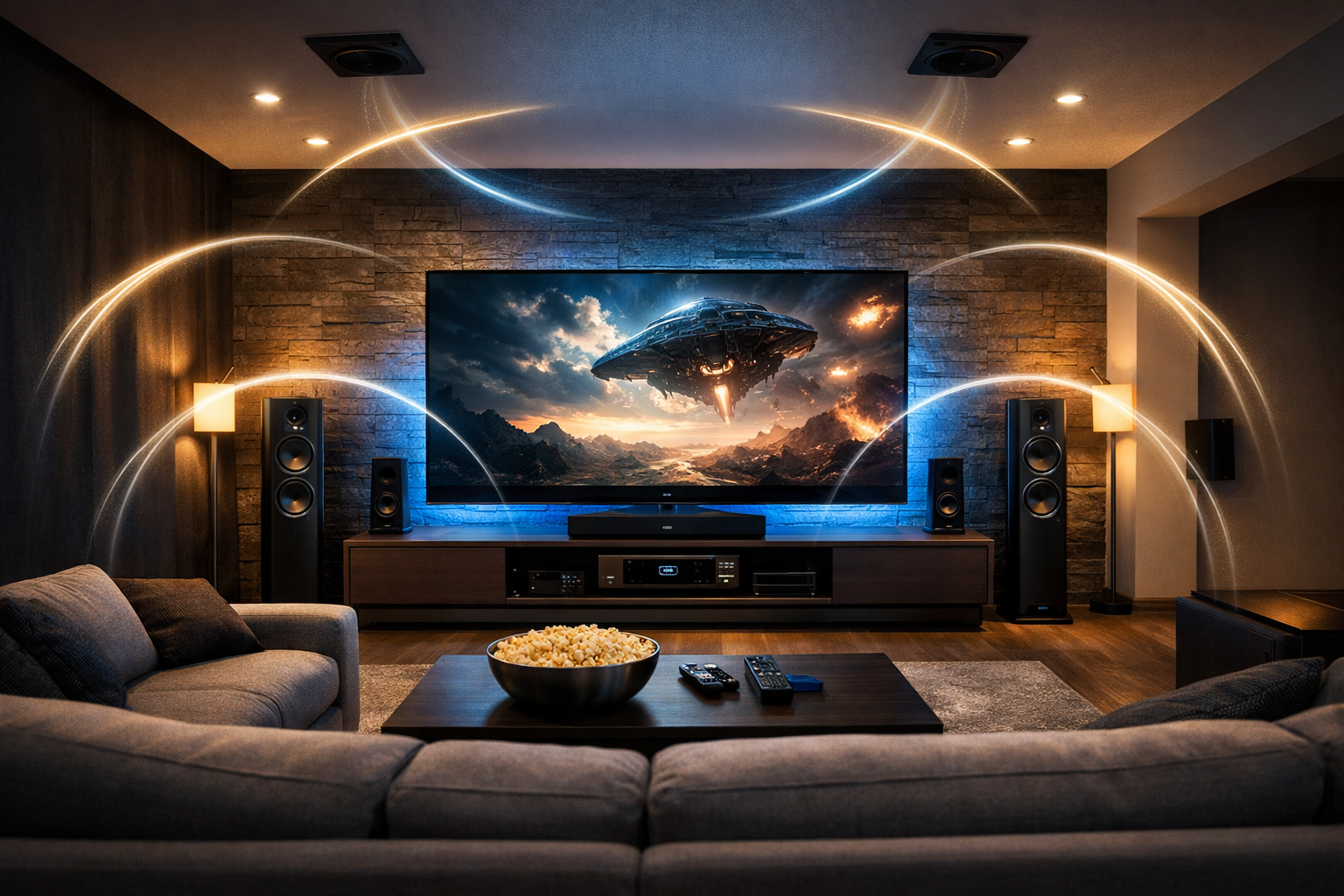
The best surround sound systems in 2026 are defined by their ability to provide an immersive, 3D audio cinematic experience, making you feel at the center of the action. 5.1 surround sound is the standard configuration with 6 audio channels, while 7.1, with 8 channels, envelops the user in a horizontal plane. Dolby Atmos adds height channels, creating a 3D dome of sound, while DTS:X offers greater flexibility in speaker placement. Picking the best system is all about finding the best acoustics that suit your lifestyle and provide a powerful cinematic experience.
Top Surround Sound Systems For an Immersive Experience
While modern TVs are increasingly thin and visually stunning, the slim designs leave little room for high-quality speakers, resulting in poor audio quality, poor dialogue clarity, and minimal bass. Surround sound began in 1940 with Disney’s Fantasia; its sound system was designed to move the sound around the auditorium. Today, the technology has evolved from 5.1 to immersive audio formats like Dolby Atmos and DTX-S support.If you are searching for the best surround sound systems near me, our team at DTV Installations offers full Home Audio Systems Installation & Design services.
| Did you know? Studies show that sound can enhance the immersive quality of the cinematic experience by creating a sense of three-dimensional reality. |
Here is your guide to the best surround sound systems for a great movie night.
5.1 Surround Sound System
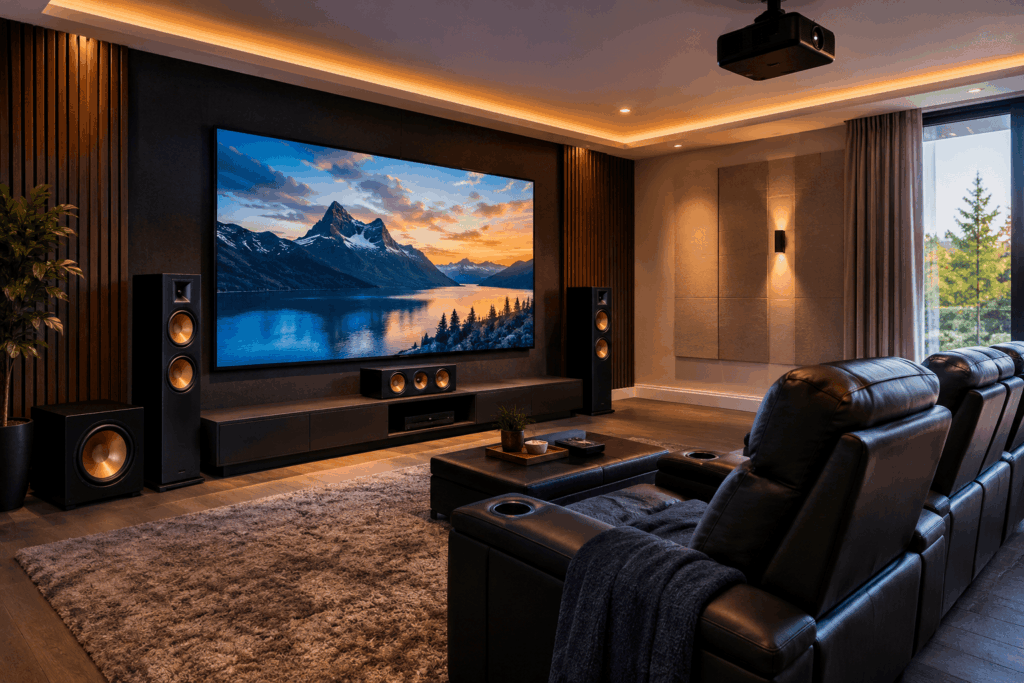
5.1 surround sound is a standard home theatre configuration that uses 6 audio channels: 5 full-bandwidth audio speakers (3 front, 2 surround) and 1 subwoofer speaker for deep bass notes.
The center speaker for dialogue, front speakers for action, and rear speakers for atmosphere make movies, music, and games deeply engaging.
Widely considered the golden standard for home cinema, 5.1 offers a balanced mix of high-quality, immersive sound and reasonable installation complexity. 5.1 is supported by most modern media, including streaming services such as Netflix and Disney+, Blu-rays and video games.
| Fast Fact: The home surround sound system market is expected to grow from $10.87 billion in 2025 to $15 billion by 2035, showing a surge in the adoption of wireless systems equipped with smart features such as voice controls and integration with smart home ecosystems. |
7.1 Surround Sound System
This 8-channel audio configuration is designed to provide an immersive soundscape for home theatres. 3 front speakers, 4 surround speakers, and 1 subwoofer envelop the listener in the horizontal plane. 7.1 upgrade provides more space in the audio, provides a better sense of depth and rear surround effects, creating a more dramatic experience for action-packed movies.
7.1 supports high-definition audio formats, including Dolby TrueHD, DTS HD Master Audio, and uncompressed LPCM, providing studio-quality sound.
| Important fact: Surround sound formats have the capability to envelop the viewer in the 360° auditory space, as opposed to the traditional 180° visual space. |
Understanding How Dolby Atmos is Different
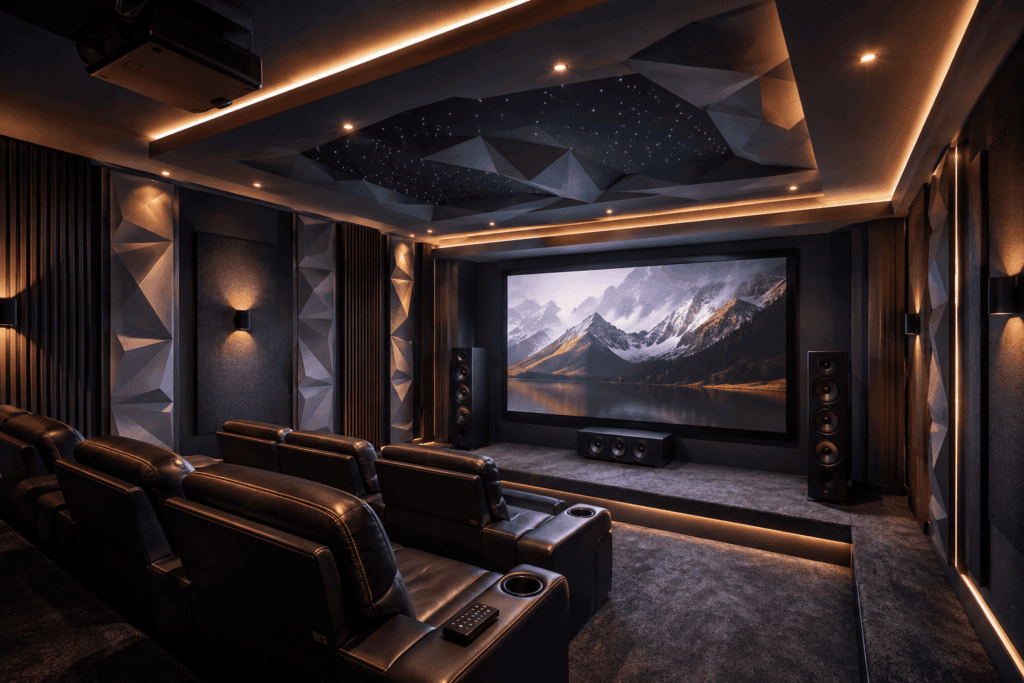
Dolby Atmos is an immersive, object-based surround sound technology that adds height channels to traditional systems, creating a 3D dome of sound with pinpoint accuracy. It incorporates ceiling-mounted speakers for a crucial third dimension of sound.
Instead of assigning sounds to specific channels (5.1, 7.1), Atmos treats sounds as individual objects that can be placed and moved anywhere in 3D space, even overhead. The versatile technology allows it to work on soundbars, home theatre systems, headphones, or mobile devices.
Wide compatibility allows it to integrate into Blu-ray discs, streaming services, and gaming consoles.
| 5.1 Surround Sound | 7.1 Surround Sound | Dolby Atmos | DTS:X | |
| Channels | 6 channels: 3 front, 2 surround, 1 subwoofer. | 8 channels: 3 front, 2 sides, 2 rear, 1 subwoofer. | Additional ceiling speakers for precise 3D positioning. (5.1.2, 7.1.4, 9.1.6) | Does not require specific speaker layout. |
| Height channels | No | No | Yes | Not necessary. |
| Immersive level | Moderate | Moderate | High | High |
| Adaptibility | Low. Channel-based | Low. Channel-based | High. Object-based | High. Object-based |
| Best For | Standard rooms. | Larger, dedicated home theatres. | Maximum immersion. Ideal for modern movies plus gaming. | Irregular rooms, media enthusiasts. |
Top Surround Sound System Recommendations for 2026
Best Budget Option: A 2.1 or basic soundbar with a wireless subwoofer is ideal for apartments or secondary rooms wanting clearer dialogue and bass without a full setup.
Best 5.1 System for Most Homes: A dedicated 5.1 speaker package with an AV receiver is the best balance of immersive sound and manageable installation for standard living rooms.
Best Dolby Atmos Setup: A soundbar or speaker system with upward-firing or ceiling-mounted Atmos channels is ideal for movie enthusiasts and modern home theaters wanting the most immersive experience.
Best for Gaming: A 7.1 surround system with low-latency HDMI eARC support delivers precise directional audio for competitive and immersive gaming.
Not sure which setup fits your space and budget? Our team at DTV Installations can recommend and install the right surround sound system for your home. Contact us for a free consultation.
What is DTS:X System?
It is an object-based, immersive, 3D surround sound format, creating a realistic, multidimensional audio experience and offering greater flexibility in speaker placement. Unlike Dolby Atmos, which requires a specific overhead speaker configuration, DTS:X adapts to existing non-standard layouts, including 5.1 and 7.1 setups.
Users can manually adjust the volume of dialogue independently of the background sound, ensuring crisp dialogue. DTS:X can adapt to and properly map audio to rooms with non-symmetrical, awkward speaker placement.
Conclusion
Surround sound systems don’t just let you hear the movie; they make you feel it. Whether you are looking for a discreet system for your small space or want an immersive, full-scale cinematic experience, modern systems offer high-class performance. Transform home entertainment today and make your space more connected and enjoyable with the best surround sound systems.
FAQs
What is the difference between 5.1 and 7.1 surround sound?
A 5.1 system typically includes a sound bar or center speaker, front left/right speakers, two rear sound speakers and a subwoofer. A 7.1 system adds two more surround speakers for more precise, immersive, rear audio.
What is Dolby Atmos and do I need it?
Dolby Atmos is crucial for modern, high-end cinematic experience. It provides a 3D audio experience, adding a vertical sound to traditional surround speakers, making sounds feel like they are coming from above.
Do I need a separate receiver for a surround sound system?
If you choose a high-end sound bar system, the subwoofer and rear speakers connect wirelessly to the main bar, eliminating the need for a separate AV receiver.